Two people in Istanbul built an open world crime sandbox on an engine they wrote themselves, and it switches between classic top down Grand Theft Auto and modern third person views in the middle of a chase. Burhan Doygun of BuBa Games explains how, and why the team will not make up numbers it does not have.
Cartoon Crime is an open world crime sandbox with a trick nobody else is doing: at any moment, even mid chase or mid fight, you can flip the camera between a modern third person view and the classic top down view of the original Grand Theft Auto games, in the same continuous world. It was built by BuBa Games, a two person studio in Istanbul, on an engine the pair wrote themselves in C++ and OpenGL rather than using Unity or Unreal. The game entered Early Access on August 26, 2026 and reached its full release on November 3, 2026 on Steam for Windows PC, priced at $2.99, with single player and online co-op.
The road to 1.0 was busy. The final pre-launch update, Update 10, landed on November 1 and added eight types of random street events, four repeatable challenges, a weapon wheel, banking, and detachable vehicle parts. We spoke with Burhan Doygun of BuBa Games by email about building an engine from scratch, the two camera idea, and what two people can and cannot do. One note before we start: Burhan checked these answers against the team's earlier studio interview and declined to invent specifics the team could not verify. Where a number does not exist, he says so. We liked that, so we left those answers exactly as written.
Why build your own engine instead of Unity or Unreal, and what was the hardest part?
Burhan: Technical curiosity and control were the main reasons. Our C++/OpenGL engine lets us shape the rendering, world logic, tools, streaming, networking and optimisation around Cartoon Crime. That also means taking responsibility for all of those systems as a two-person team. The difficult part is getting them to work together consistently in an open world, particularly when vehicles, police, missions and the camera are all involved at once.
Where did the camera idea come from?
Burhan: We enjoy both the older top-down crime games and modern third-person open worlds. Classic GTA is part of that inspiration. We wanted those two ways of experiencing a crime sandbox in one continuous world. You can change perspective during a chase, while driving or in a fight, without loading another mode or restarting the situation.
How does switching views change the way people play?
Burhan: Third-person puts you closer to the character and the street. Top-down gives an overhead view of the surrounding action and a more classic arcade feel. The same situation continues underneath either camera, so the player can choose what feels comfortable in that moment. We do not have measured player-behaviour data, so we would not present an unexpected driving or combat habit as an established trend.
How did two people build and fill an open world?
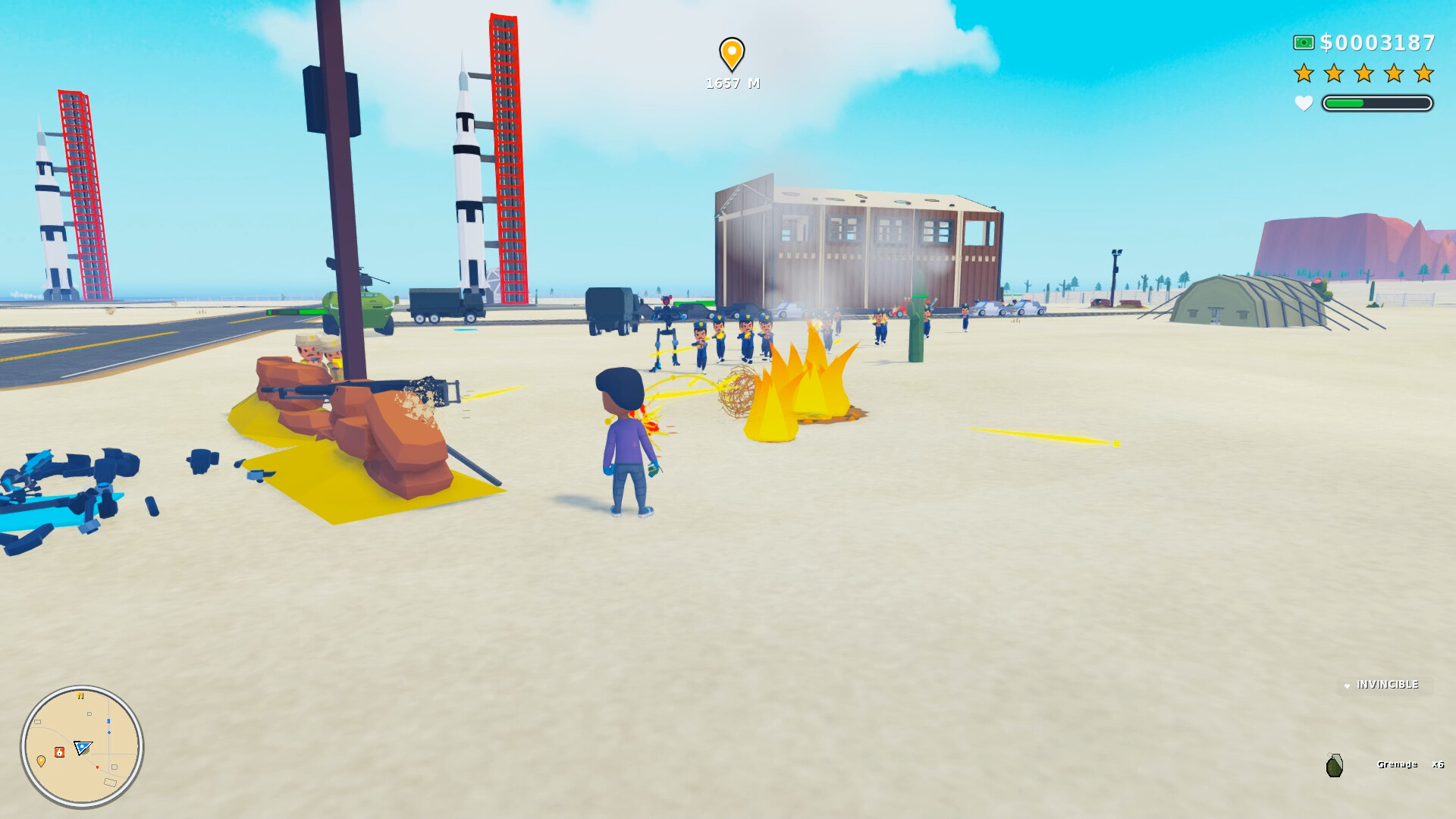
Burhan: We do not have a measured square-kilometre figure to quote. The world contains different districts, islands and interiors, with optional missions, street events and activities including bowling, billiards, arcade machines and kickboxing. As a two-person team, we move between programming, world building, gameplay, UI, testing, performance work and support. Prioritising the scope matters a great deal. The side activities give people reasons to visit places and take a break from fights and chases; they remain optional.
How do the police work?
Burhan: Committing crimes raises the wanted level, and the response escalates into pursuits and larger confrontations. Camera changes need to preserve that ongoing situation. Police behaviour, vehicle feel, camera readability and performance have all been important areas of feedback and refinement. We would rather describe that loop than promise a particular level of police intelligence.
What can players do with bodyguards?
Burhan: Players can hire bodyguards who accompany them and fight alongside them when trouble starts. It gives the sandbox another option beyond going out alone. We can confirm the companion system, but do not have a separate verified account of its original design motivation to add.
How did the game develop through Early Access?
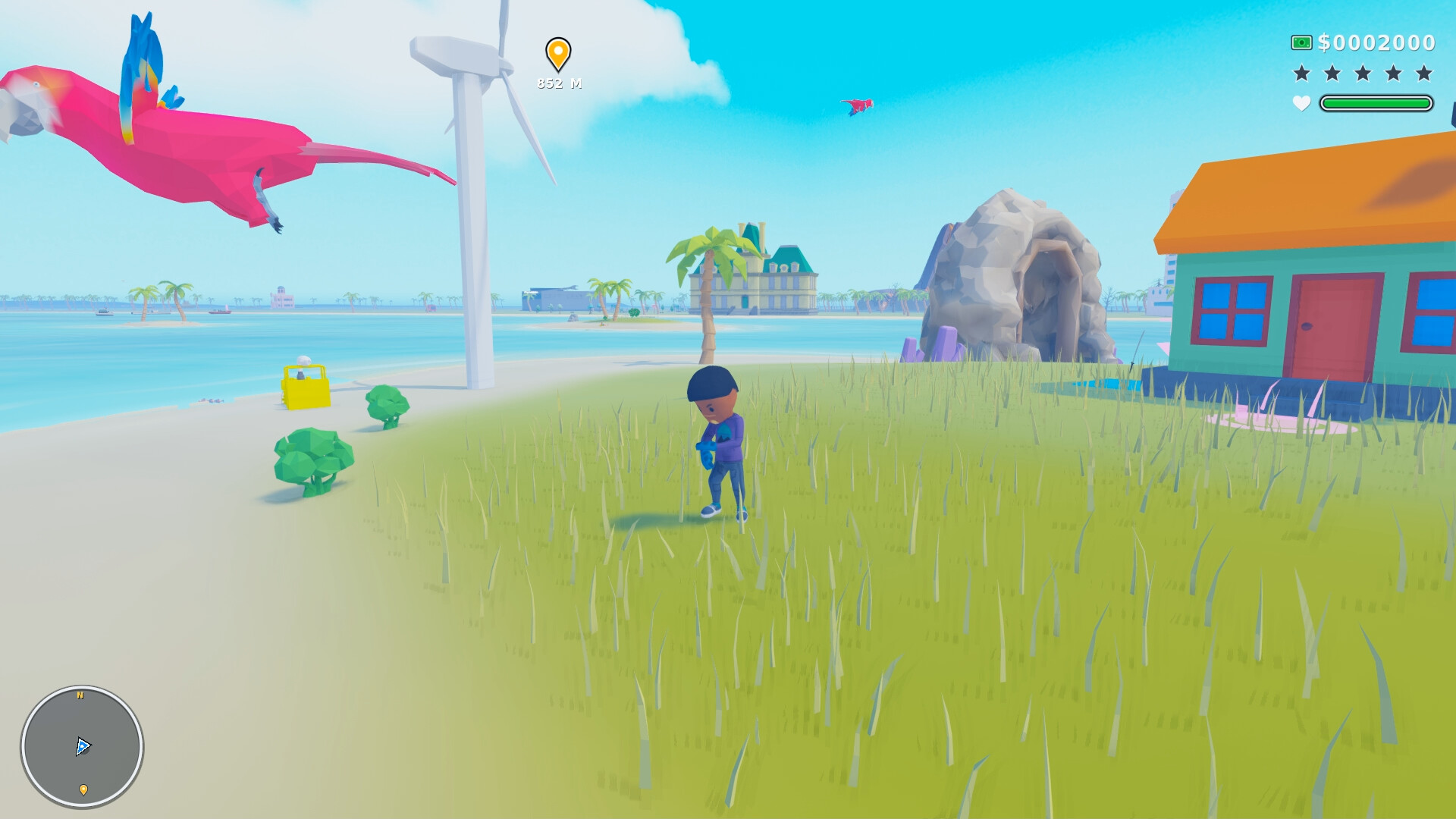
Burhan: Cartoon Crime entered Early Access on August 26, 2026 and reached full release on November 3. Over that period, work covered the world and its activities as well as existing systems. Feedback on performance, driving, camera behaviour, police and online co-op helped identify where the experience needed attention. We repeatedly returned to those systems alongside adding content. We cannot attribute a particular feature to an individual player's suggestion without checking its history.
You disclosed upfront that AI tools assisted with some art and text work. Why explain that openly?
Burhan: We want readers and players to understand what the tools were used for. They assisted with some pregenerated 2D elements, text editing/localisation and development tasks. We review, edit or reject the results ourselves. No content is generated by AI during gameplay. The disclosure describes that use; it is not a claim that the game creates its world or characters live with AI.
What comes next, including Steam Deck?
Burhan: Our focus has been improving the existing game, its systems and performance. We do not have a dated new-content roadmap or a Steam Deck verification result to announce. We have not verified handheld compatibility, so please describe this as a Windows PC release rather than a confirmed handheld release.
Cartoon Crime is out now on Steam for Windows PC at $2.99. Thanks to Burhan and BuBa Games for taking the time, and for giving a small team's honest answers the space they deserve.
Loading comments...